My research examines how sustainability transition pathways are imagined, selected, financed, governed, and implemented in African contexts.
I am particularly interested in how visions, worldviews, political-economic interests, and investment logics shape what is seen as investable, scalable, and worth building within sustainability transitions.
My work asks how technologies, infrastructure concepts, and place-based development initiatives move from imagined futures into financeable, governable, and scalable projects.
Research Focus Areas
Research Focus Areas
Sustainability Transitions
How socio-technical systems, institutions, infrastructures, markets, and cultural worldviews change over time.
Low-Carbon Energy and Liquid Fuels
The role of low-carbon fuels, biomass systems, synthetic fuels, and liquid-fuel pathways in petroleum-dependent economies.
Petroleum Dependence and Fiscal Sustainability
How fossil-fuel dependence shapes public revenue, industrial systems, energy security, infrastructure investment, and transition risk.
Public Finance, Social Investment, and Transition Finance
How budgets, grants, procurement, social investment, philanthropy, blended finance, and investor perceptions shape what becomes fundable and investable.
Entrepreneurial Ecosystems and Community Wealth Formation
How founders, enterprises, social investors, public institutions, and ecosystem actors support place-based development and community wealth formation.
Urban Innovation and Institutional Experimentation
How cities, campuses, and municipalities test, govern, and institutionalise sustainability innovations under real-world constraints.
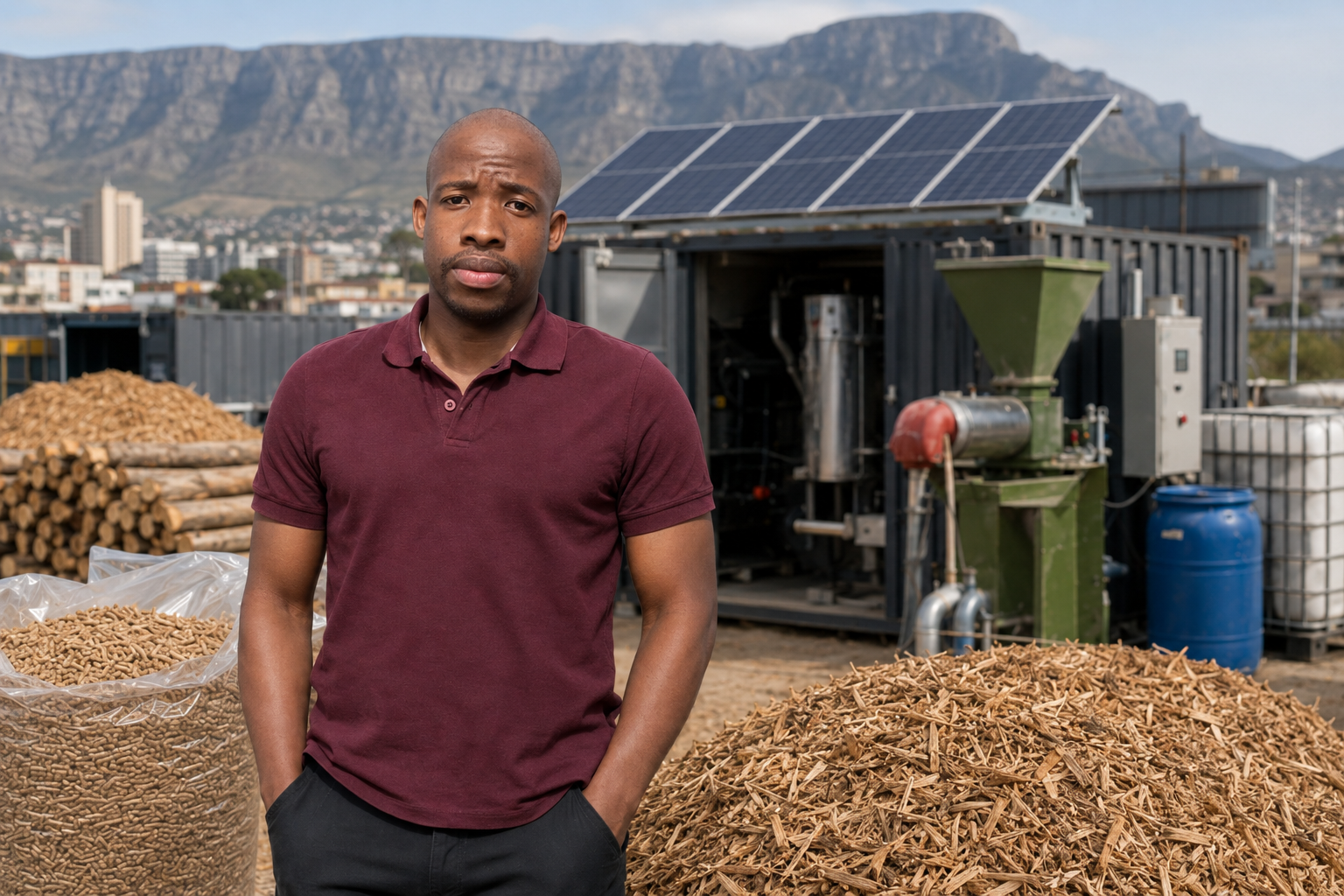
Lesedi In Front of the Modular Biomass Hub Mock-Up
I am currently in the final stages of design and raising funding for the infrastructure. Construction is expected to start in the beginning of August 2026 at the Potsdam Sustainability Campus for the Making Biomass Investable thesis
Current Research Programme
My current research is connected to the Centre for Sustainability Transitions and explores investability perceptions and niche formation around modular biomass and pellet hubs that use alien invasive biomass to support South Africa’s low-carbon liquid-fuel transition.
The work examines the technical, financial, governance, institutional, and investability dimensions of these systems, while linking them to urban innovation and infrastructure experimentation at Potsdam Sustainability Campus.
This research forms part of a broader interest in how low-carbon infrastructure concepts move from imagined futures into projects that are technically credible, financially investable, institutionally governable, and socially valuable.
Guiding Questions
1. How are low-carbon transition pathways selected, financed, governed, and implemented in petroleum-dependent economies?
2. What makes a modular biomass or pellet hub appear investable, scalable, and worth building?
3. How do visions, worldviews, political-economic interests, and investment logics shape transition pathway choices?
4. How do public finance, social investment, and blended finance influence niche formation and infrastructure development?
5. How can urban innovation experiments move from pilot concepts into financeable, governable, and scalable projects?
6. What do transition choices mean for fiscal sustainability, industrial capability, infrastructure development, community wealth formation, and development within planetary limits?
Methods and Tools
My work draws on:
Narrative literature review Policy analysis Public finance analysis Municipal budget tracking Document analysis Interview guide design Thematic coding Scoring matrices Indicator-based analysis Case study research Techno-economic thinking Life-cycle thinking Investability analysis Public-facing research translation
My Portfolio
My Portfolio
Working Papers
Documentation of our impactful workshops focusing on community engagement and sustainability learning.
Other Academic Publications
A collection of our published research on sustainability transitions and best practices in African contexts.
Your Heading
Frequently Asked Questions
Find answers to common inquiries about our services, engagements, and research focus.
We offer research collaboration, facilitation workshops, sustainability learning programs, and innovation support tailored to community needs.
You can participate by joining our workshops, collaborating on research projects, or contributing to community engagement initiatives.
Our research centers on sustainability transitions within African contexts, particularly regarding energy, public finance, and community empowerment.
Get In Touch
We welcome your messages and feedback, and are eager to support you in your sustainability journey.
Lesedi Monnanyane is an emerging scholar-practitioner dedicated to exploring sustainability transitions across Africa, focusing on how communities can be empowered through informed practices and research-based strategies.
Holistic Approach
We utilize an interdisciplinary approach that integrates diverse fields such as economics, environmental science, and social research.
Community Engagement
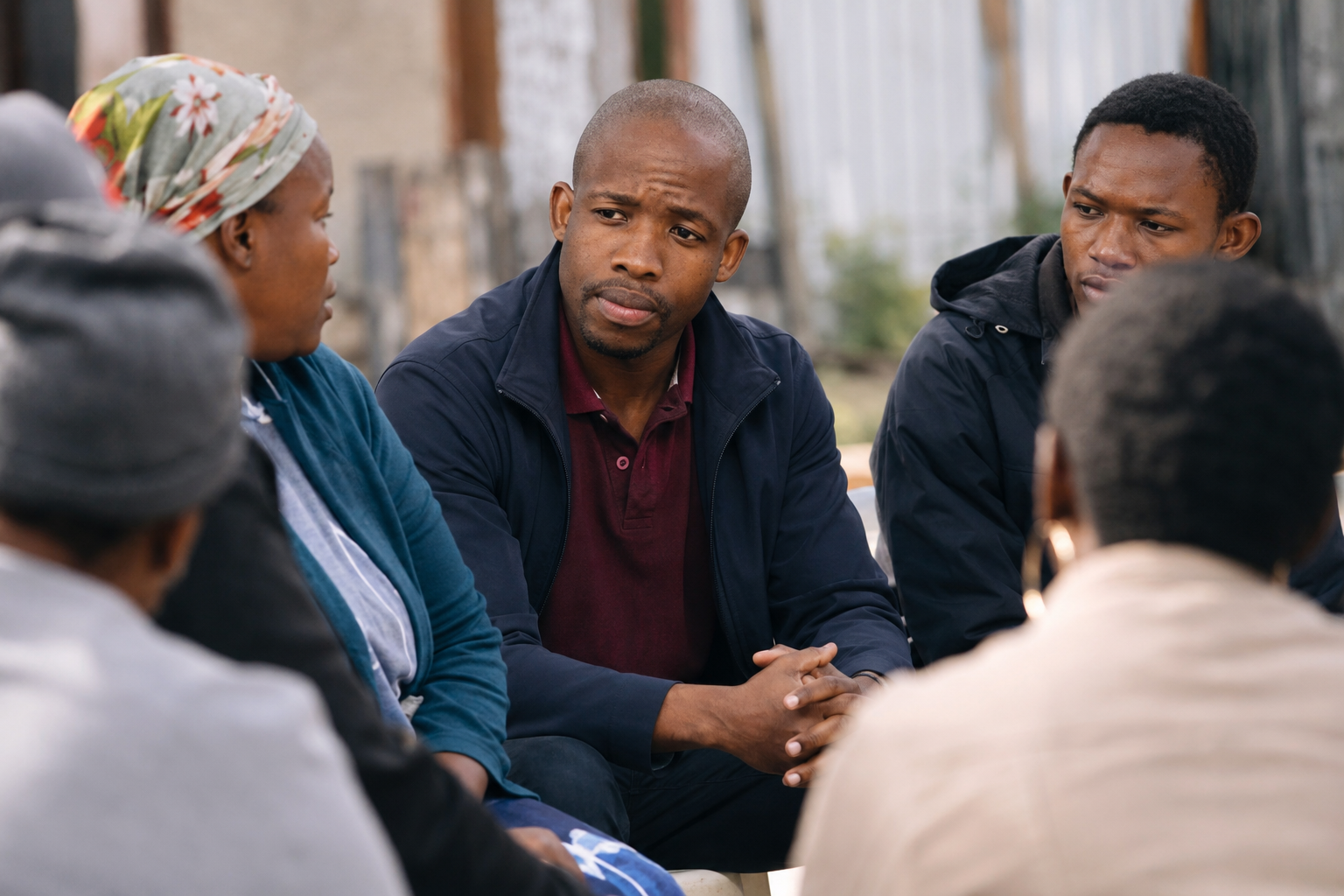
Engaging with local communities to ensure that sustainable practices are tailored to meet their unique needs and aspirations.